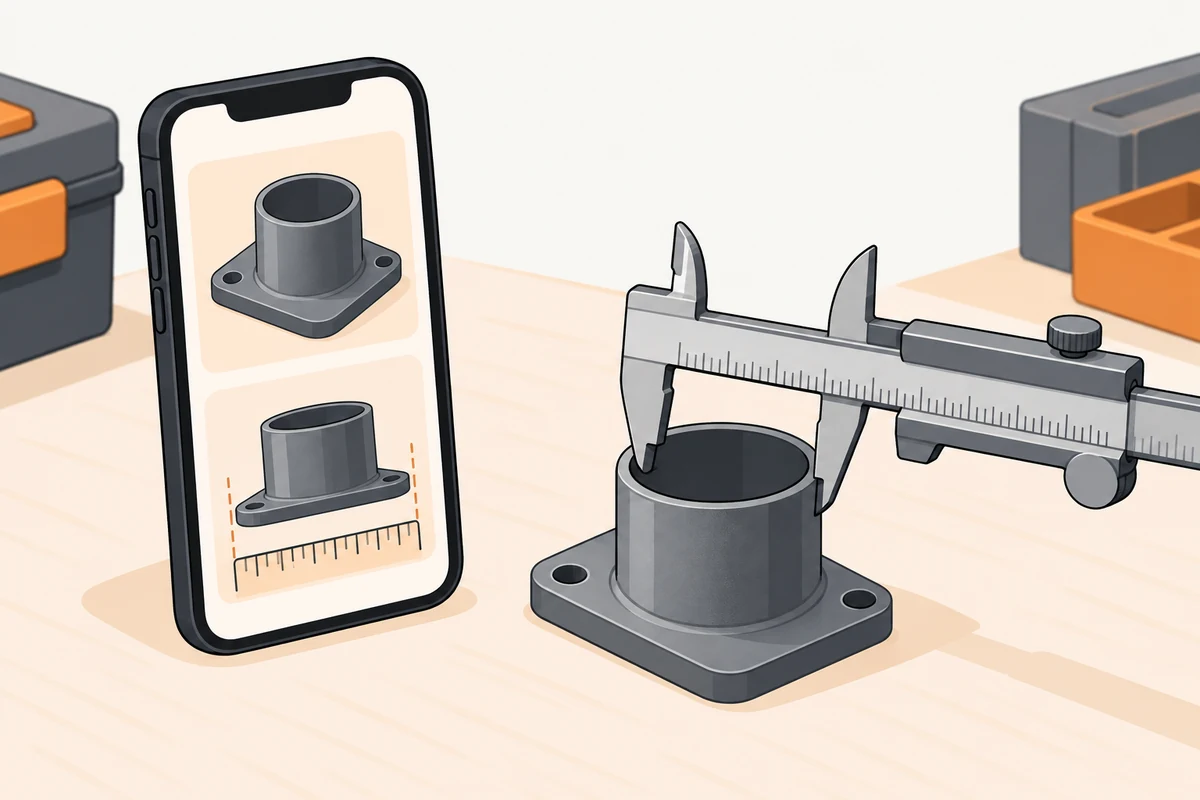
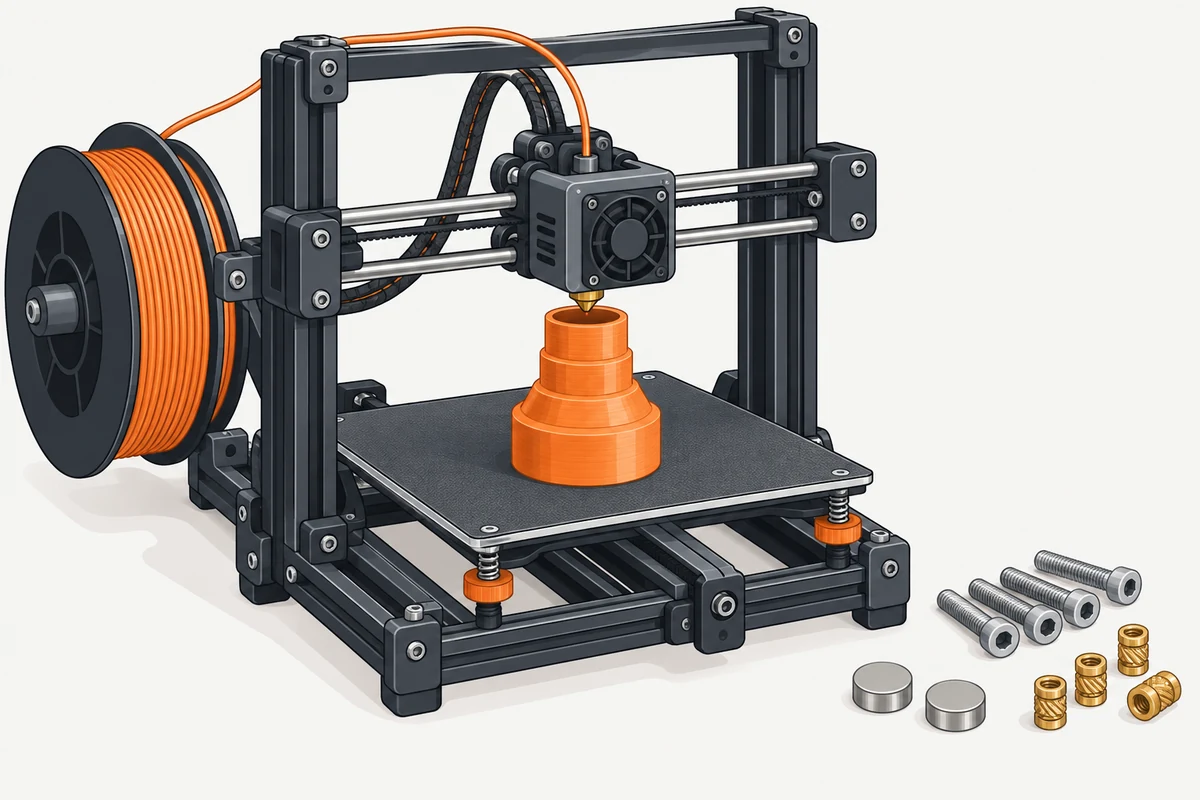
Tell us what almost fits, ideally with a photo. We design the part that does, 3D-print it in the right material and ship it worldwide from Europe: toolbox inserts, adapters, brackets, enclosures, replacement parts.
A person replies within 1 working day, in any language
Free quote, fixed price
Pay only after you approve the design
Doesn't fit as promised? 100% refund or a better version
We're just starting out, so every request gets our full attention and a good price.
New: bike mounts
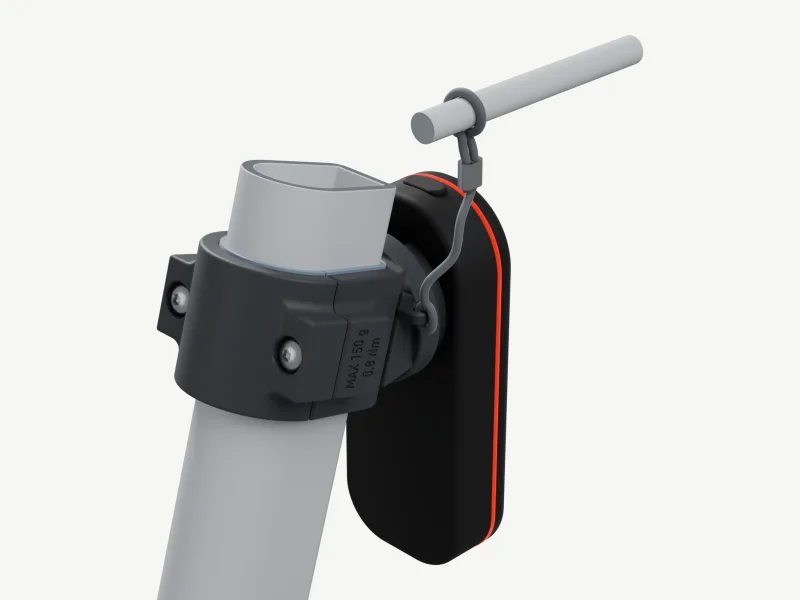
A Garmin Varia mount for your aero seatpost. A computer mount for your integrated cockpit.
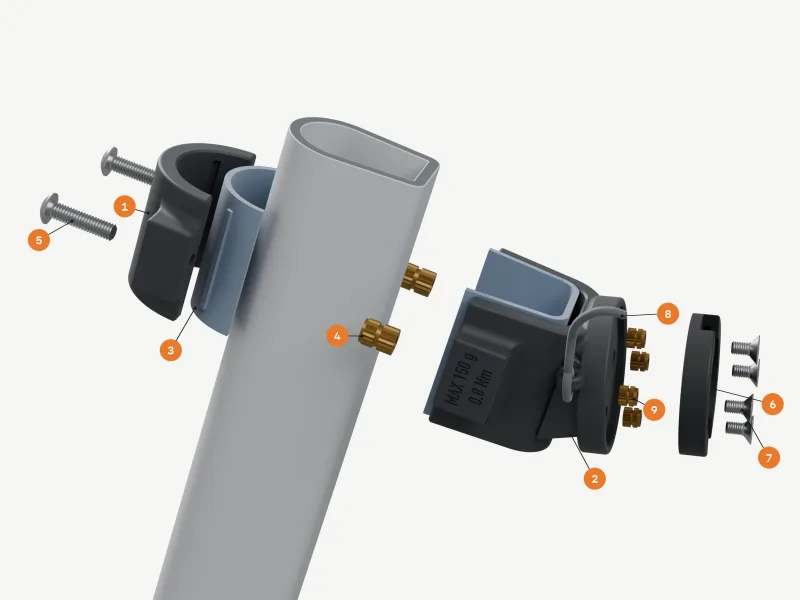
If the stock mount turns on your aero post, or no mount fits your integrated cockpit, we draw one for your exact post, bar and device, in PA-CF or ASA with brass inserts.
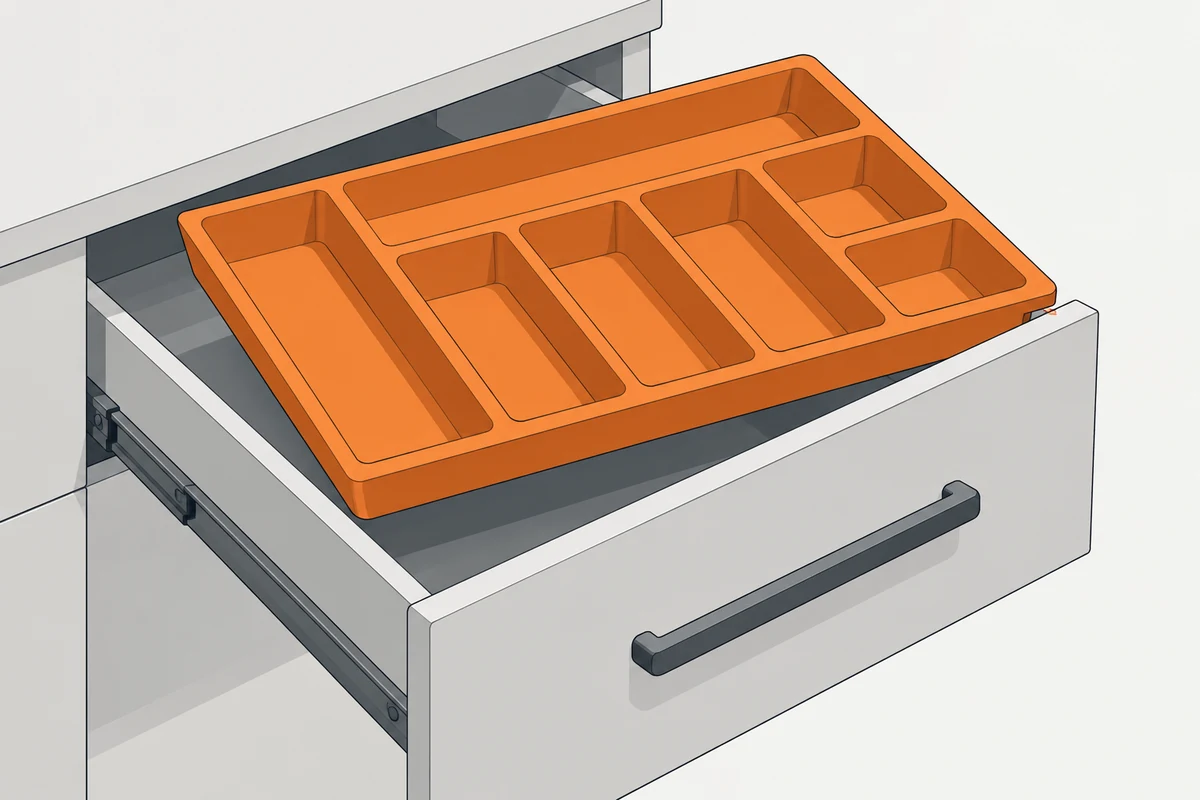
Loose tools rattle around, and the one you need is always at the bottom. Here's how an insert shaped to your box and your tools comes together.
Measure your toolbox
Measure the inside length, width and depth, plus the room under the lid. A tape measure is all you need.
Photograph your tools
Lay your tools on a sheet of squared paper and take one photo from straight above. The squares give us the scale.
You: Put the pliers next to the screwdrivers and add finger notches.
AI: Done. Pockets are 1.5 mm larger than each outline, 18 mm deep. The 13 mm spanner won't fit next to the tape measure; move it to the top row?
You: Yes, and leave a spare slot for my 17 mm.
Talk it through with AI
Say what goes where, which tools need finger notches and how deep the pockets should be. A person checks and approves the final design before anything is printed.
Get your design
We send it on WhatsApp with a private link to check your insert in 3D, with every pocket shaped to its tool. The price is fixed, and you pay only once you approve the design.
Nothing moves
Get your insert
We have it printed in PETG, in interlocking sections if your box is bigger than a print bed, or Gridfinity-compatible if you prefer. Drop it in, close the lid and shake: nothing moves. Perfect.
Everyone has one. A thing that's 3 mm off, a screw hole in the wrong place, a part they stopped making. Here are a few.
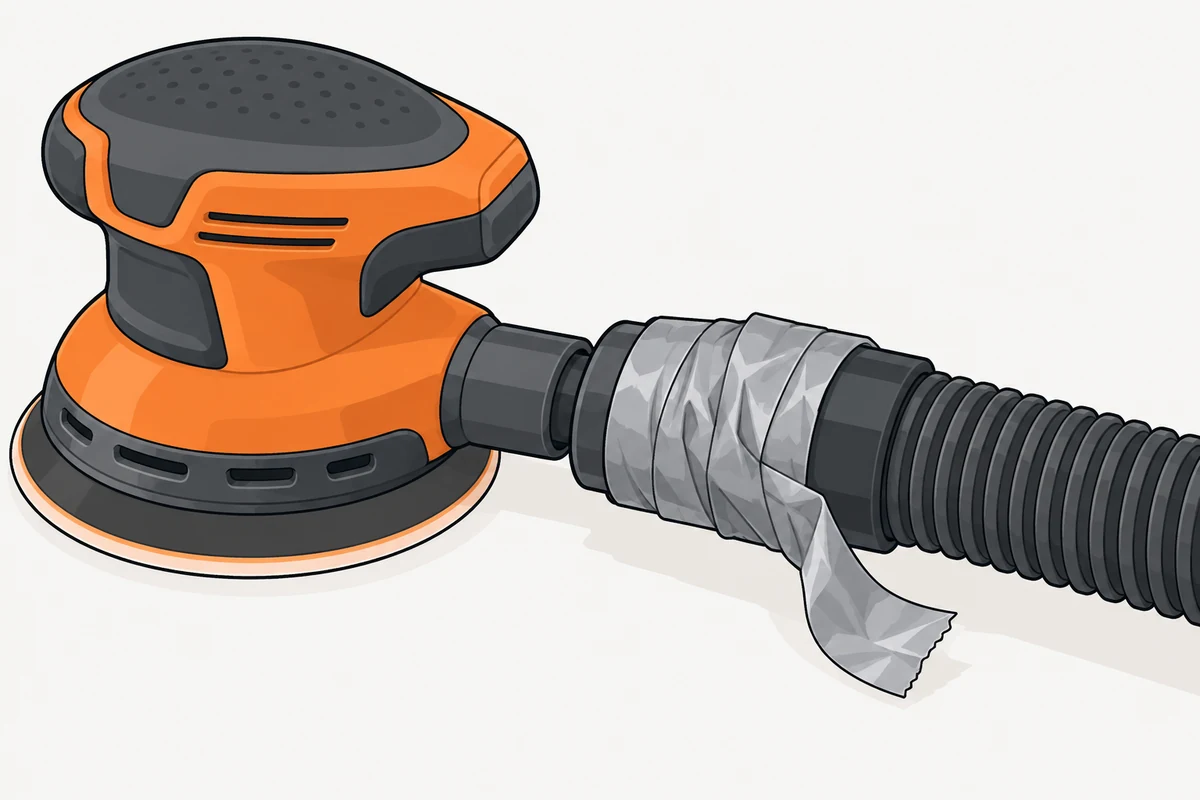
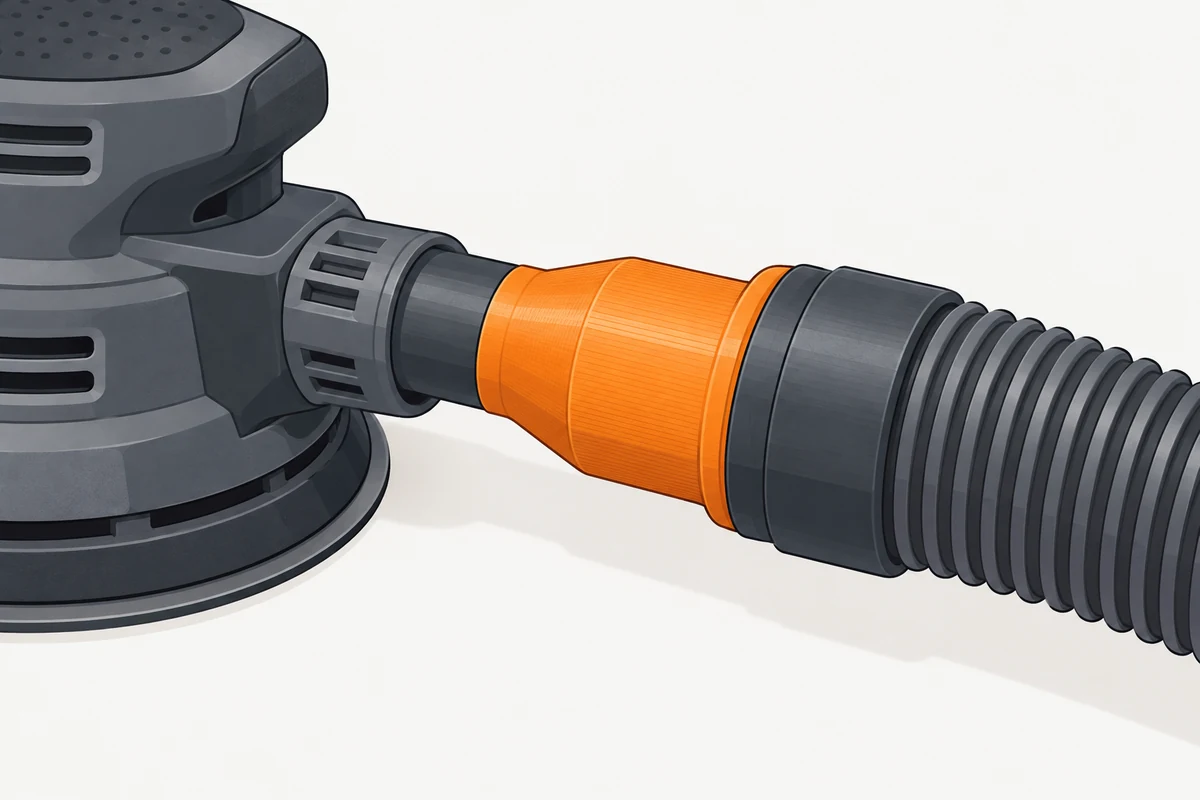
🪚Your sander's dust port and your vacuum hose are a few millimetres apart. Nobody sells that exact adapter. Try the adapter model →
🚲Your Garmin Varia rotates sideways on the D-shaped seatpost every few kilometres. See the radar mounts →
🗄️One drawer pull broke and the model was discontinued years ago. Replace all twelve, or live with a gap?
🔌After renovating, there's a ragged hole around the light switch that the standard frame doesn't cover.
📟Your ESP32 project lives in a takeaway box because no case has holes in the right places.
⌨️Your split keyboard would be perfect tented at 15°, but every kit is made for a different model.
🧰You do the same assembly two hundred times a week and would love a jig that holds the part exactly right.
☕Your tamper, distributor and portafilter are all different sizes, and every station on sale fits someone else's kit.
💻Your mini PC has no VESA holes, and the "universal" mount wobbles.
🛒Your barcode scanner has no proper place on a cramped shop counter.
🏠The house numbers you love don't fit the narrow post by your gate.
Each of these is small, and each is missing one piece. We make that piece.
Recognise one of these, or have your own? Tell us about it; a sentence and a photo are enough.
The problem
Why so many things almost fit
Mass production runs on moulds. An injection mould for a single plastic part typically costs thousands to tens of thousands of euros, so a factory only makes a part when it can sell many thousands of identical copies.
That's why products come in the most common size, for the most common model. If your setup is less common, you're on your own. "Universal" parts try to fit everything and end up fitting nothing exactly.
Mass production made things for the average person. Nobody's setup is average.
So people improvise.
duct tape
zip ties
cardboard shims
hot glue
a book under one leg
"I'll just buy a new one"
Why a few millimetres matter
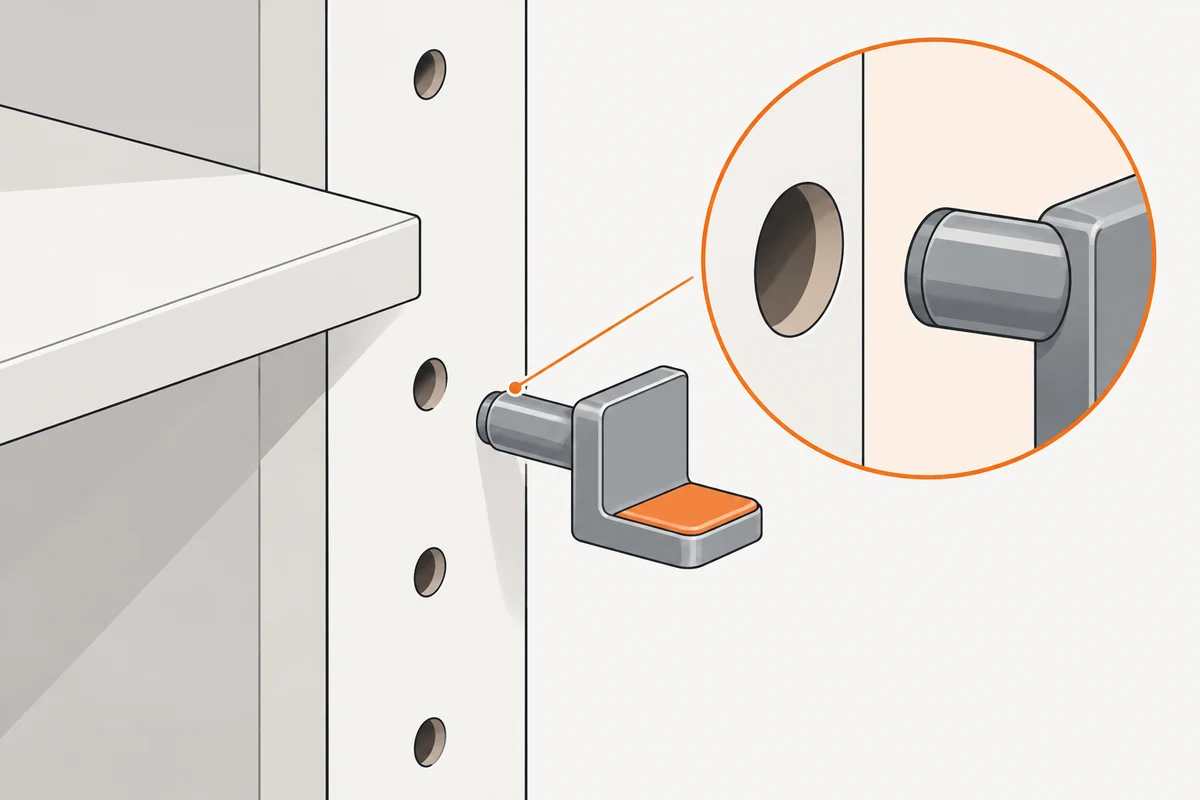
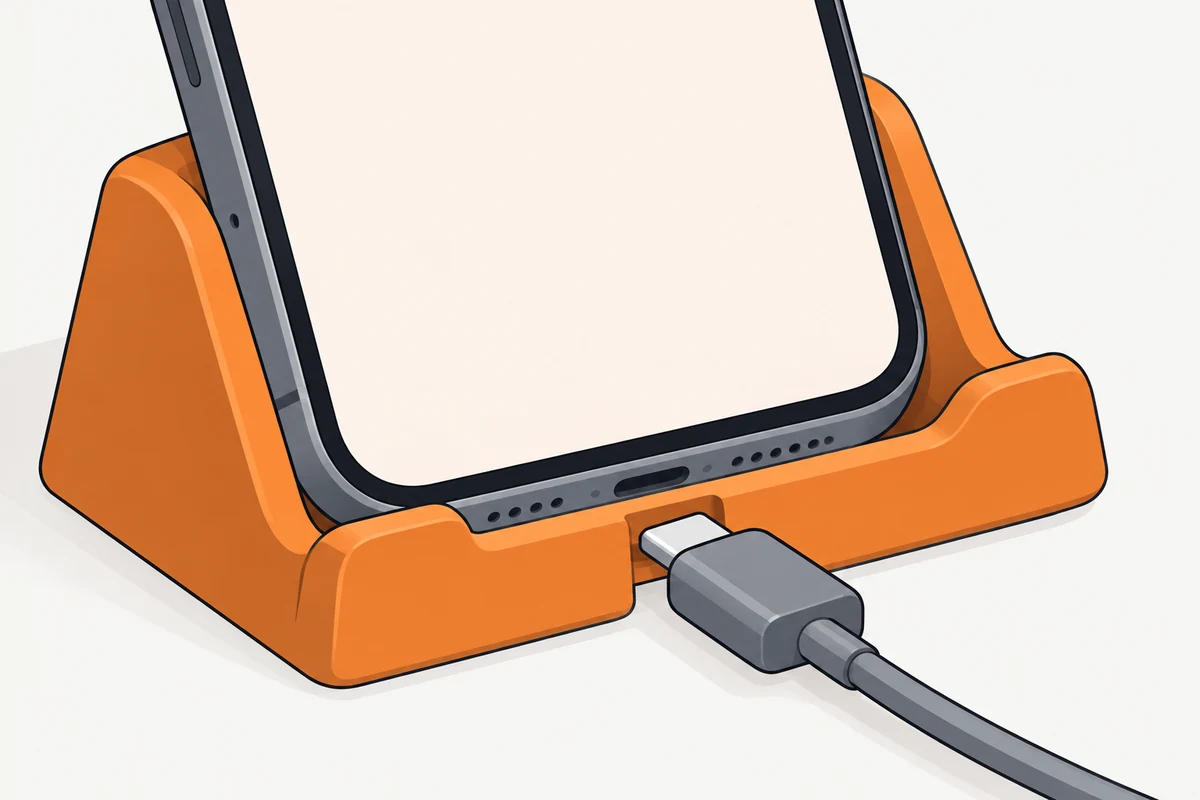
Dust port vs hoseFestool alone uses 27, 32 and 36 mm hoses. Other brands differ again, so: tape.Drawer organiserA few millimetres too wide, so it sits on the drawer instead of in it.Shelf pins5 mm or ¼ inch? Lose one and the replacement never quite fits the hole.Phone standAdd a case and the stand's lip blocks the charging cable.
Desktop 3D printers hold about ±0.5 mm, so we design clearance into every fit and test-print the tight ones.
What changed
Why a one-off part doesn't have to be expensive any more
Custom used to mean a fresh engineering project. Now most of the work is done before you ask.
Cost of one custom part
Traditional: drawn from scratch, machined as a one-off
Us: reused design, 3D print, standard parts2–3× a mass-produced equivalent
Mass-produced equivalent, if one existed
Cost of one part, compared.
Where the cost goes
Traditional one-off
Us
Design: reused from past projects, AI does the research, we check every dimension
Setup: no mould or machine setup for a print
Making: a print's first copy costs about the same as the hundredth
Example: a dust-extraction adapter concept. Every value is a parameter we can change.
See it before you pay
Your part, in 3D, before you pay
Questions, concepts and the price come in the same WhatsApp chat. With the concept you get a private link to your part in an interactive 3D viewer. It works on a phone and on a desktop.
Rotate, zoom and look at the part from the side, the top or from inside your device.
Red dimensions are our assumptions. Green ones are our design. You'll always know what still needs checking.
Questions come with a reason: we ask for model names first, because spec sheets often make measuring unnecessary.
Answer in the chat whenever you've found the tape measure.
Want to see the engineering? Download the STEP file and open it in any CAD program.
The link is private and unguessable, and isn't indexed by search engines. Anyone you forward it to can open it, so keep it to yourself.
Every design is a formula
Try it: a dust-extraction adapter for your exact tool and hose
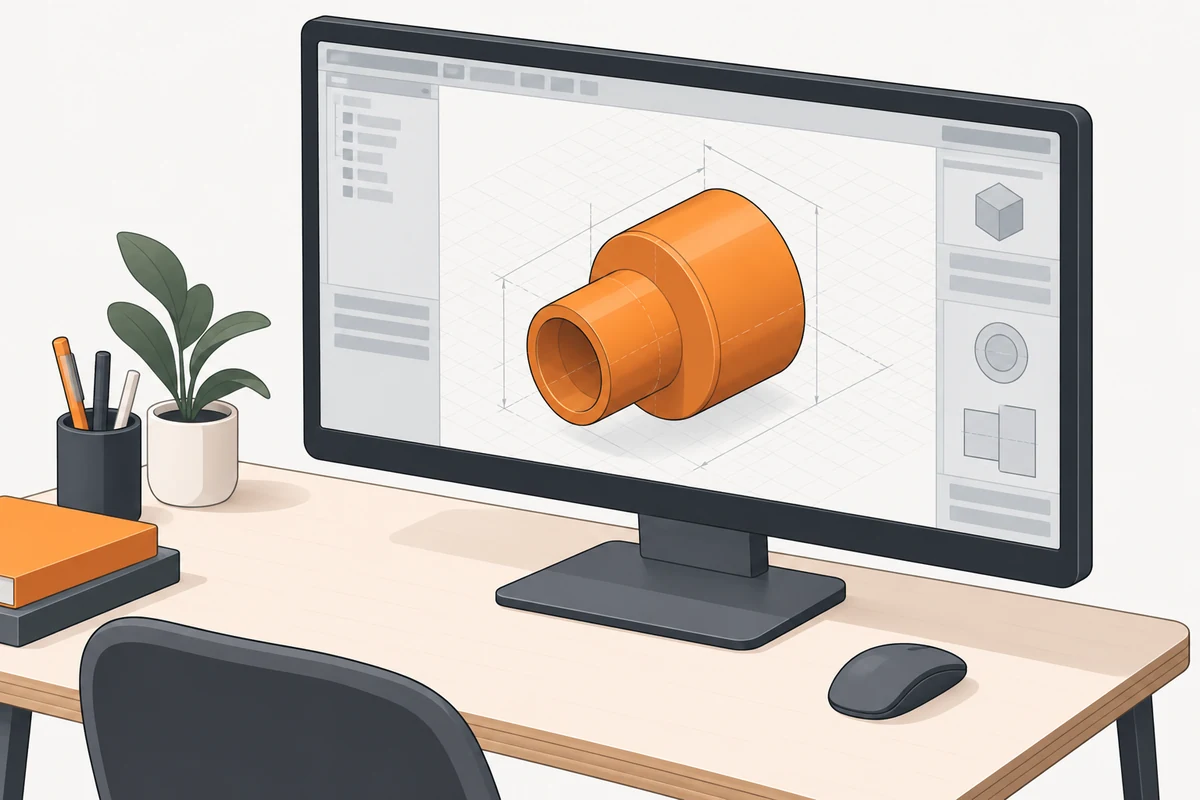
The adapter below is a simplified demo of how our models work: the part is a small program, and your measurements are its inputs. Move the sliders and the part redraws itself. Once a design exists, the thousandth variant takes minutes to make instead of a day.
adapter(
  port_od = 32.0,  # your tool
  hose_id = 38.0,  # your hose
  grip    = 30,
  wall    = 2.4,
)
≈ 23 g PETG≈ 2 h printingclearance 0.4 mm
Real adapters also get a measuring guide, a test of the push fit, and a check that the tool's airflow isn't choked.
Connect tools, hoses and extractors that were never meant to meet.
Toolbox and case inserts shaped to your tools
Hose adapters and reducers between brands
Soft vise-jaw inserts for delicate workpieces
Pegboard and wall holders for your tools
Drill-bit and fastener organisers
PETG, TPU
Electronics enclosures
Cases with the holes in the right places, for your board and your mounting spot.
ESP32, Arduino, Raspberry Pi Pico, Wemos D1
Sensor housings for walls, DIN rail, poles
Front panels with your switches, ports and display
Low-voltage projects only
PETG, PETG-FR, ASA outdoors
PC and desk
Brackets and mounts for your hardware and your desk.
VESA adapters for mini PCs and docks
Under-desk cradles, cable grommets
Keyboard tenting wedges at your angle
Graphics card supports for your case
ASA, PETG · aluminium profile
Home, kitchen and replacement parts
Finish the job when standard trims come up short, or replace a plastic part nobody sells any more.
Oversized plates behind switch and socket frames
Replacement drawer pulls, knobs, clips and battery covers
Doorbell surrounds, vent and pipe trims
House-number panels for narrow posts
Tamping stations and organisers for your coffee kit
PETG, PETG-FR where available · ASA outdoors
Family and everyday life
Small fixes for the problems no catalogue thought of.
Toothbrush and charger stands for your devices
Fitted organisers for prams, bikes and cars
No magnets; nothing small enough to swallow
PETG, TPU · off-the-shelf parts first
Workshops and small businesses
Fixtures that save seconds on every repetition, plus repeat units on demand.
Assembly and drilling jigs
Packing and labelling fixtures
Barcode scanner and terminal docks
Counting trays, display cradles, shelf adapters
PETG, ASA, PA-CF · metal inserts
Interior designers
One-off hardware and details in metal, cast from a printed master. In preparation.
Pulls, knobs and escutcheons
Plates, grilles and trims
Resin samples first, then brass or bronze
No minimum order
cast brass, bronze · resin samples
Don't see yours?
Most fit problems don't have a category until someone asks. Describe yours.
Examples
Examples of how we work
The problem, the research, the idea and the details that make it fit, on a typical bike job.
Example · bike
A radar mount that doesn't twist on an aero seatpost
My Garmin Varia rotates sideways on the D-shaped post every few kilometres. The band mount from the box was made for a round tube.A typical request
Why it's hard
Aero and D-shaped posts have no round section for a band to grip. Specialized, Trek, Canyon, Basso and Sensa each use a different profile, and the factory mount, if it exists, is made for current models only. A saddle bag often takes the only spot left.
Research
We logged 299 problems from a research index of 433 sources: forum threads, shop reviews and listings. From the bike and post model we find the profile in photos and spec sheets, and check how exact-fit aluminium mounts and printed mounts attach. What we can't confirm is marked red for you to measure or trace.
Idea
A two-piece clamp traced from your post, with a TPU liner on the paint and two M4 bolts into brass inserts. Where a seat pack is in the way, an arm on the saddle's own accessory holes or a plate on the rack's light tab instead.
We print the custom geometry, the bit that has to fit your thing, and use standard parts for everything else: screws, magnets, threaded inserts, rails. A printed arm on an aluminium rail is stiffer than an all-printed bracket, and a brass insert holds a thread far better than plastic.
We pick the material, you don't have to.
Material
What it's good at
Softens around
We use it for
PETG
Tough, slightly flexible, handles moisture; not for years in full sun
70–80 °C
Most indoor parts, adapters, enclosures, organisers, fit tests
ASA
UV and weather resistant, holds shape when warm
95–100 °C
Outdoor parts, PC internals, anything near heat
TPU
Rubbery, grips and damps
flexible
Pads, soft jaws, grips, feet, seals
PETG-FR
Flame-retardant PETG
70–80 °C
Enclosures, and cover plates around switches and sockets
PA-CF
Carbon-filled nylon, very stiff and strong
above 100 °C
Loaded brackets, jigs, parts that must not creep
Resin
Fine detail, smooth surface
varies
Samples, masters for casting, small detailed parts
Cast brass / bronze
Real metal, weight and finish
n/a
Designer hardware made from a printed master
PLA
Easy to print, stiff
55–60 °C
Rarely: it creeps under load and softens in a hot car
Layers oriented along the load, extra walls and denser infill for parts that carry weight.
Tolerances that fit
Push fits, slides and snaps get clearance built in. Tight fits get a test print first.
Files you can open
Designs export to STEP, the format every CAD program reads, for CNC or casting too.
Pricing
How much a custom 3D-printed part costs
Three things set the price: size, material and design effort. For most things, expect 2–3× the price of a similar mass-produced part. We keep it there on purpose: right now, a portfolio of parts that fit matters more to us than a big margin.
Rule of thumb
2–3×
the shop price of a mass-produced equivalent
Size How much plastic and how many hours of printing
Material PLA and PETG are the baseline; ASA, TPU and nylon cost a little more
Design effort A standard fit, or measuring, test pieces and a tight fit
Examples
Small and simple
Dust-extraction adapter
Your sander's port to your vacuum hose. About 40 g of PETG.
Universal adapter, if one fits€8–15
Made for your tools€29
Tiny, our minimum
Replacement clip or bracket
A broken clip, knob or shelf support, about 15 g. It needs the same careful measuring as a big part.
Spare part, if still sold€3–8
Made to matchfrom €19
Large, more design
Toolbox drawer insert
A pocket for each of 15–20 tools. About 500 g of PETG and around 20 hours of printing.
Foam insert you cut yourself€25–45
Shaped to your tools€99–129
Bike mounts follow the same rule. The honest comparison is the universal mount that doesn't fit; exact-fit aluminium mounts cost €55–83. See all bike mounts and prices →
Small, outdoors
Rear radar or light mount
Garmin Varia on an aero seatpost or under the saddle. About 30–60 g of ASA.
Universal band mount, made for a round post€9–15
Shaped to your postfrom €39
Stiff, more design
Computer mount for an integrated cockpit
Garmin quarter-turn on top, GoPro underneath, bolted to the faceplate through steel sleeves, so the bolt load stays in metal. About 50–90 g of PA-CF with inserts.
Round-bar out-front mount, if it clamps€20–30
Made for your cockpit€59
Same adapter, different material
Material
Filament /kg
Adapter
PLA or PETGIndoors, everyday use
€20–30
€29
ASASun, heat, outdoors, cars
€25–30
€32
TPUSoft and grippy, seals on the hose
€25–35
€35
Nylon with carbon fibreStiff, resists wear and heat
€50–90
€39
Iterations
One version or a few
Most parts are right the first time. For a tight press fit we first send a thin test ring (€6 plus delivery); for a complex part you can budget for full prototypes. You choose.
The adapter, 1 version€29
With 2 test rings€41
Complex part, 3 full versions2× one version
The plastic in a small part costs a few euros. Tougher materials cost more mainly because they need drying, an enclosed printer and slower printing. On a big part it matters more: the toolbox insert in ASA instead of PETG adds €15.
Reorders and variants
Once a design exists, a spare or a version for another size or model is a parameter change. You don't pay for the design again.
Fixtures and batches
For workshops and businesses: design once, then a price per unit, from 1 to a few hundred. NDA on request.
What every order includes
A private 3D design page with the questions that matter for your fit
Small revisions until you approve
The part in the right material, with any screws, inserts or pads it needs
Fitting instructions, safety notes and a label for easy reordering
The STEP file of your design
The fit promise: doesn't fit as we promised? 100% refund or an improved version
Target timeline: first 3D concept the next working day, shipping within 10 working days of your approval.
Prices include taxes. Your exact price is fixed before we start, together with your 3D concept, and doesn't change after. Asking is free, and so is the first concept for most small parts. Delivery is priced separately: see delivery options and prices. Shop prices are typical listings, such as a Bosch hose reducer or a Milwaukee Packout foam insert; filament prices from a 2026 retailer overview.
Doesn't fit, and we said it would? 100% refund or a better version.
If the part doesn't fit the things we agreed it would fit, send us a photo and choose: your money back in full, or an improved version, free. If the cause was a measurement you gave us, we still fix the design and the new part costs production only.
Pay after you approve
You see your part in 3D and its fixed price before paying anything. Large design jobs get a design fee you agree to in writing first.
No minimum order
One part is a perfectly normal order. So are two hundred.
A person checks everything
AI helps us research and draft. We check every dimension ourselves before anything is made.
Straight answers
If we can't make it well, or a shop already sells it, we'll say so.
Your data stays private
Your photos and details are used for your order only and never published.
Any language
Write to us in the language you're most comfortable in.
Limits
What we won't make
Printed plastic is excellent for a lot of things and wrong for some. We'd rather lose an order than make a part that fails in a way that hurts someone.
Nothing safety-critical: parts that carry people, brakes, steering, climbing or lifting gear, child seats.
No weapons or weapon parts, and nothing designed to get around a safety device.
No medical devices: nothing that diagnoses, treats or is meant to compensate for an injury or disability. Easier-grip versions of everyday objects, yes, without health claims.
Nothing that replaces electrical insulation. Our cover plates sit behind the original certified frame, which stays in place. Enclosures are for low-voltage electronics.
No parts for repeated direct contact with food or drink.
No magnets, and nothing small enough to swallow, in anything used around children.
No copies of someone else's trademarked or patented product for resale.
Compare
They Make Things vs 3D printing services, CAD freelancers and universal parts
There are other ways to get a part that fits. Here's how they compare for one small custom part.
Question
They Make Things
"Universal" part from a shop
Online print service (you upload a file)
Freelance CAD designer
Free model sites
Your own 3D printer
Do you need a 3D file?
No, a description is enough
No
Yes, you upload it
No, but you measure and brief
No, but the model is generic
Yes, or design it yourself
Fits your exact models
Yes, designed for them
Rarely
Only if your file is right
Yes
Rarely, it was made for someone else
If your design is right
Who carries the fit risk
We do: full refund or a better version if it doesn't fit as promised
Free model, plus printing; licences often forbid selling prints
A Bambu Lab A1 is about 1,200 zł, plus learning CAD
Reorders and variants
A parameter change
n/a
Re-upload
Often a new job
Remix it yourself
Redesign
One contact from idea to delivery
Yes
Yes
No
No
No
Yes: you
If a standard product already solves your problem, we'll tell you and point you to it. It happens, and it's cheaper for you. Ask us first →
For business
For workshops, makers and interior designers
Jigs and fixtures, set up once
If your team positions the same part hundreds of times a week, a fixture shaped for that exact part saves seconds, mistakes and rework on every repetition. You pay for the design once. Spares and copies for other stations cost production only, and a new product variant is usually a parameter change.
For example, a jig that saves 10 seconds on a part your team handles 200 times a week gives back over half an hour every week, at every station.
One-off details, from drawer pulls to escutcheons and plates, cast in metal by the lost-wax process from a printed master. You review a resin sample before any metal is poured.
We want every "it doesn't fit" to end with a part that does.
Now
Describe it, we design it
You tell us the problem. We make your part from past designs, experience and AI research, 3D-printed with standard hardware. Every design is saved as a template.
Next
Pick it, size it, order it
The most-requested fits get their own pages: choose your tool and hose, your mini PC, or your board, enter a number, and see the price instantly.
Later
Ask, and it already exists
You type "Bosch PEX 300 AE to Kärcher WD 3" into a search box, or ask an AI assistant, and the adapter is already there: designed for the first person who asked, resized for you in seconds, posted the same week. Every part we make today adds one more fit to that library.
Fix it, don't bin it
A broken handle shouldn't mean a new cabinet. A missing adapter shouldn't mean a new vacuum. A small printed part often keeps a much bigger, perfectly good thing in use for years.
Made on demand: no warehouse of unsold stock, no minimum batch to clear.
Made to order in Europe and shipped in small parcels.
Only as much material as the part needs, with standard metal parts where they're stronger.
Designs kept on file, so replacements are easy years later.
They Make Things started in 2026 with a simple question: can a thing made for one person be affordable, if every design becomes a reusable template?
We make custom things for a specific need. Past projects, experience and AI let us do it at scale: AI digs through spec sheets and drafts options, and we check every dimension. We 3D print in the material the job needs and add standard parts (screws, magnets, threaded inserts, rails) to make it real.
The name comes from the question we kept asking about every "universal" product: who makes the thing that actually fits? Now, we do.
Delivery
Worldwide, from Europe. Costs and times are on the delivery page.
The questions we expect before you order a custom part. Can't find yours? Ask us.
Getting started
What is They Make Things?
We make custom things for your specific need: adapters, brackets, mounts, enclosures, inserts, cover plates and replacement parts that fit what you already own. Past projects, experience and AI let us do it at scale. We 3D print in the material the job needs and add standard parts such as screws, magnets, threaded inserts and rails. You describe the problem; you get a finished part, not a drawing.
What kind of parts can you make?
Small functional parts up to the size of a shoebox: adapters between two products, brackets and mounts, electronics enclosures, cover plates, organisers and inserts, replacement handles and knobs, jigs and fixtures. Larger things can be printed in sections. When a part must be metal, we can have it cast or machined from our design.
Do I need a 3D model or a technical drawing?
No. A description, the model names of the products involved and, ideally, a photo are enough. Making the 3D model is our job.
What information should I send?
In order of usefulness:
What you're trying to do and what goes wrong now.
The make and model of every product involved, for example the sander and the vacuum.
Anything you've already tried, and why it didn't work.
A photo with a ruler or tape measure in the frame.
Model names often let us find dimensions in spec sheets, so you may not need to measure anything.
Can you make a part from a photo?
A photo shows us the shape, but not reliable dimensions. Add a ruler in the frame, shoot square-on, and give us one or two measurements of the part that has to fit. Together with model names, that's all we need.
How do I measure for a custom part?
Digital calipers are best; a steel ruler is fine. Measure twice, at more than one spot, and write down the units. For round things, measure the diameter where the part will grip, not at a flared end. For holes, measure centre to centre. On your private design page we show exactly which dimensions matter and where they are on the model.
I don't know the exact model of my product. Can you still help?
Yes. Look for a label on the bottom or back, or send photos from a few angles and we'll identify it. Otherwise, a few measurements will do.
Can you 3D print a replacement for a broken or discontinued part?
Yes, as long as it isn't safety-critical: knobs, clips, battery covers, hinges, feet, handles and similar plastic parts. Send photos of the broken part next to a ruler, and of where it attaches. We make compatible parts, not branded copies: no logos, and our own name as the maker. If photos aren't enough, we'll arrange for you to send us the part.
Do you do 3D scanning?
Not at the moment. Most fit problems are solved faster with model names, photos and two or three measurements. Professional scanning often starts at around 250 zł net, which is often more than the part itself.
How long does it take?
For most small parts we aim to send a first 3D concept within one working day of your request. After you approve the design, we aim to ship within 10 working days; transit times are on the delivery page. Complex parts and cast metal take longer; you get a date before you pay.
Which languages can I write in?
Any language you like.
Price and payment
How much does a custom part cost?
It depends on size, material and design effort. For most things, expect 2–3× the price of a similar mass-produced part: €29 for a dust-extraction adapter, from €19 for a small replacement clip, €99–129 for a toolbox drawer insert. Reorders and variants cost less, as the design already exists. Delivery is priced separately. You always get a fixed price before paying; see more examples.
How much does custom 3D design usually cost elsewhere?
Oferteo's price guide puts CAD work at roughly €25–60 net per hour, and redrawing a part from measurements at usually €35–50 net and up, before anything is printed. It gives the average 3D printing job as about €150. We come in lower for small parts, because designs are reused as templates instead of drawn from scratch every time, and our price includes the printed part.
Is the quote free?
Yes. Describing your problem and getting a quote is free, and so is the first 3D concept for most small parts. For large or complex designs we agree a design fee with you in writing before we start, so you never pay for work you didn't approve.
When do I pay?
After you approve the final design and its price, and before production starts. We send an online payment link, or you can pay by bank transfer.
Can I get an invoice for my company?
Tell us in the chat that you need one, with your company details, and we'll confirm how we invoice together with your quote.
Are the prices final?
Yes. Prices for private customers are final prices, including taxes. Delivery is priced separately and shown before you pay; nothing else is added.
Why is the second part cheaper than the first?
Because the expensive part of custom work is design, not printing. PETG filament costs around €20–30 per kilogram, so a small part contains a few euros of plastic. Our designs are parametric: once one exists, a reorder or a variant for a different size or model is a parameter change and a quick check. The second customer with the same problem doesn't pay for the design again.
Is there a minimum order?
No. One part is a normal order, with nothing added to reach a minimum. Many print shops have minimum orders of about €10 to €35.
Can I order several, or a batch?
Yes. Units after the first cost only production. Printing needs no mould, so batches from a handful to a few hundred are practical. For thousands of identical parts, injection moulding may become cheaper, and we'll tell you when it does.
Materials and durability
Is a 3D-printed part strong enough?
For the right job, yes. Printed parts are strongest along their layers and weaker across them: in CNC Kitchen's tests, parts pulled across the layers kept only 29–55% of their strength. So we orient every part along its load, add walls and infill where it matters, and use metal (aluminium profiles, steel screws, brass threaded inserts) where plastic alone isn't enough. We don't make safety-critical parts.
Which material will you use?
We choose it for the job: PETG for most indoor parts, ASA for outdoor parts and warm places, TPU for anything soft or grippy, flame-retardant PETG near electronics, carbon-filled nylon for stiff loaded parts, resin for fine detail, and cast brass or bronze for premium hardware. The materials table explains each one.
Will it survive heat, for example inside a PC or a car?
We design for it. PLA softens at 55–60 °C, so we avoid it anywhere warm. PETG softens at 70–80 °C and ASA at 100 °C, and parts under load creep well below that. For warm places we use ASA: it suits PC interiors and car cabins, but not a dashboard or rear shelf in direct sun. Tell us where the part will live and we'll pick the material accordingly.
Can the part be used outdoors?
Yes, in ASA, which resists UV light and weather much better than common printing plastics, with stainless hardware. We avoid PETG for long sun exposure: in one accelerated weathering study it lost 36% of its tensile strength.
How accurate is a 3D-printed part?
Desktop FDM printers are typically accurate to about ±0.5%, and not better than ±0.5 mm, even when well calibrated. That's why we design clearances into every fit (a few tenths of a millimetre for sliding parts) and print a test piece when a fit is critical.
Is a printed part waterproof?
It can be made watertight with thicker walls; in Prusa's tests, a PETG or PLA test cylinder needed four perimeters to hold water, and most real parts worked with four to six. For enclosures we add gaskets and cable glands where needed.
Will it look 3D-printed?
Close up, you'll see fine layer lines on most printed parts. For functional parts that's normal. Where looks matter, we orient the visible face carefully, print in resin, sand and paint, or have the part cast in metal.
What colours are available?
Black, white and grey are always possible. Tell us what you'd like and we'll check. Metal parts can be polished, patinated or plated.
Can printed parts be painted, drilled or glued?
Yes. Most of our plastics can be sanded, painted, drilled and glued. If you plan to do that, tell us and we'll leave extra material where you'll work on the part.
Are 3D-printed parts food safe?
We don't make parts for repeated direct contact with food or drink. Even when the plastic itself is food-grade, layer grooves are hard to clean and can harbour bacteria; Prusa's guide explains why. Organisers, stations and holders that don't touch food are fine.
Fit, returns and delivery
What if the part doesn't fit?
If it doesn't fit the things we agreed it would fit, send us a photo and choose: a 100% refund, or an improved version at no cost. If the cause was a measurement you gave us, we still fix the design and the new part costs production only. That's why we mark every dimension we assumed in red before you approve.
Can I return a custom-made part?
A part made to your measurements or specification can't be returned just because you changed your mind: under EU consumer law (Article 16(c) of Directive 2011/83/EU), the 14-day right of withdrawal doesn't apply. We confirm this in writing before you pay. A part sold unchanged from our library can be returned within 14 days of delivery (see the terms). Your statutory rights always apply: if a part didn't conform to the contract at delivery and this shows within two years, you can ask for a repair or replacement or, if that isn't possible, a price reduction or a refund. Our refund-or-better-version promise comes on top.
Do you make test prints?
When a fit is tight or a part carries load, yes: we print a quick test piece, usually in PETG, before the final part. For some parts we send you the test piece to try in place.
Where do you deliver?
Worldwide, from Europe. Costs and transit times by destination are on the delivery page.
What comes in the box?
Your part, any hardware it needs (screws, inserts, pads), fitting instructions and safety notes in English or Polish, and a label with the part's ID and our details as its maker, so a replacement is easy to order later.
Files, ownership and privacy
Can I get the 3D file of my part?
Yes. Your design page includes a STEP file, the standard exchange format for CAD and CNC, which you can open and edit in any CAD program. Ask if you also need an STL for printing.
Who owns the design?
You own your physical part and can use its files for your own needs. We keep the general design, the template, so that people with the same problem benefit from it. Your measurements, photos and personal details are never shared. If your design is confidential, for example a fixture for your own product, tell us: we'll sign an NDA and won't reuse it. If you need the rights to the design itself, we agree that in writing before we start.
What do you do with my photos and data?
We use them only to design and deliver your part and delete them on request. They're never published or sold. Requests shown on this page are anonymised summaries. Details in the privacy policy.
Can you print a model I found on Printables, MakerWorld or Thingiverse?
Only if its licence allows it. Many models are shared under non-commercial licences that don't permit selling prints without the designer's permission. If a free model almost fits, we'd rather design a part that fits exactly.
Can I send you my own STL file to print?
We focus on designing parts that fit, so we're not the cheapest print-only service. If you have a file for a functional part and want advice on material or fit, send it over. If you just need a print, an online print service will suit you better.
Business and design
Do you work with businesses?
Yes. We make assembly and drilling jigs, packing fixtures, soft jaws, scanner and terminal docks, display cradles and other parts for workshops, shops and small manufacturers. You pay for design once; spares and copies cost production only.
Can you sign an NDA?
Yes. Mention it in the chat and we'll sign one before you share details.
Do you work with interior designers?
Yes, with one-off hardware and details cast in brass or bronze by the lost-wax process from a printed master. The service is in preparation: ask us for a quote, a lead time and a resin sample.
Can you design a product that I will sell?
We can design and make small batches of a product for you. If you plan to sell it, tell us at the start so we agree on ownership of the design in writing upfront.
Safety
Is there anything you won't make?
Yes: safety-critical parts, weapons or weapon parts, medical devices, anything that replaces electrical insulation, parts for repeated food contact, children's items with small magnets or swallowable parts, and copies of other companies' protected products for resale. See what we won't make.
Are your switch and socket cover plates safe?
Our plates are decorative covers printed in PETG, or flame-retardant PETG-FR where available. They sit behind the original frame, which stays in place along with the switch or socket mechanism, and don't replace any part of the electrical installation. Fitting one means taking off the frame, and on some switch systems unscrewing the mechanism from the box, so switch the circuit off at the breaker or have an electrician fit it. The frame and cover must still click fully into place; if they don't, don't use the plate. If the box behind is open or damaged, call an electrician first.
Are your parts safe for children?
For anything used around children we avoid magnets, sharp edges and small parts that could come loose, and we prefer proven off-the-shelf components.
About us
Who is behind They Make Things, and where are you based?
A small team in Europe, started in 2026. We work out every part ourselves, 3D print it in the right material with standard hardware, and ship it worldwide.
How do you use AI? Does AI design my part?
AI is our research and drafting assistant. It reads spec sheets, manuals and forum threads, finds dimensions from model names, drafts designs and helps write and check parametric CAD code. For layouts like toolbox inserts, it can talk the design through with you. A person checks every dimension and approves every design before anything is made. Fit is proven with measurements and test prints.
How is this different from a 3D printing service?
A 3D printing service prints the file you upload, and a design service sells you a drawing. We make the finished thing. We start from your problem: we find the dimensions, shape the part, choose the material, add standard hardware where needed and stand behind the fit. You never need a 3D file.
Why should I trust you?
You don't have to take anything on trust. You see the design in 3D and agree a fixed price before paying, and if it doesn't fit as agreed, you get a full refund or a better version.
Specific parts
Can you make a Garmin Varia mount for my aero seatpost?
Yes. Tell us the bike and seatpost model, or send a photo of the post from the side and behind with a ruler, and your device. We design a two-piece clamp traced from the post, in PA-CF with a TPU liner and two M4 bolts into brass inserts, or an arm on the saddle's accessory holes if a seat pack is in the way. From €39. See radar mounts.
Can you make a computer mount for an integrated aero handlebar?
Yes, for cockpits we can look up or you can photograph, such as Canyon CP0018 and CP0045, Syncros on Scott, or Zipp SL-80. The arm bolts on with the faceplate bolts through steel sleeves, so the bolt load goes through metal, never plastic. We use your stem maker's bolt grade in the right length, with its torque and tightening order. It takes a Garmin quarter-turn on top and a GoPro light or camera underneath. Carbon-filled nylon with metal inserts, €59. We don't make stems, bars or spacers. See computer mounts.
Can you make a custom toolbox insert (foam alternative) for my tools?
Yes. Measure the inside of your box (length, width, depth and the room under the lid), lay your tools on squared paper and send one photo taken from straight above. We design a pocket for each tool, with finger notches where you want them, and have the insert printed in PETG: in interlocking sections if the box is bigger than a print bed, or Gridfinity-compatible if you use that system. An insert for a whole box is a bigger print than most of our parts, so we price it from your photo and measurements, and you see the fixed price before you pay. See the steps.
Can you make a custom vacuum hose adapter for my power tool?
Yes. Dust ports aren't standardised between brands, and Festool alone uses 27, 32 and 36 mm hoses. Tell us the tool and the vacuum or extractor models, or measure the outer diameter and depth of the tool's dust port and the inner diameter of the hose cuff, and whether either is tapered. We design a push-fit adapter in PETG with the right clearance. Our adapters are for workshop vacuums (shop vacs) and dust extractors at room temperature. They're not for metal-grinding sparks, hot dust, flammable vapours or ATEX (explosive-atmosphere) zones, and printed PETG doesn't carry static away like an antistatic hose does. Try the adapter model.
Can you make a custom case or enclosure for my ESP32, Arduino or Raspberry Pi Pico?
Yes. Tell us the board (ESP32 DevKitC, S3, C6 and CAM variants differ), the connectors, buttons, displays and sensors you use, and where it will be mounted: wall, DIN rail, desk or outdoors. We put openings and mounts in the right places, keep the Wi-Fi antenna clear of walls and away from carbon-filled plastics, and give temperature sensors their own vented chamber, because the ESP32's own heat can push readings up by 2–7 °C. Low-voltage projects only.
Can you make a tamping station for my espresso kit?
Yes. Tell us your portafilter size (51, 53, 54 or 58 mm are common), your tamper and distributor, any other tools, and the space you have. The station holds your exact kit. It holds tools, not food.
Can you cover the gap around my light switch or socket?
Yes. We make an oversized cover plate to your width and height that sits behind the standard frame and hides holes, chipped plaster or paint gaps around the usual 60 mm flush box. The original frame and mechanism stay in place.
Can you make replacement drawer pulls or cabinet handles?
Yes. Send the centre-to-centre distance between the screw holes; 96, 128 and 160 mm are common. Add photos of the handle's shape. Printed pulls suit painted or modern kitchens; for a premium look we can have them cast in brass.
Can you make keyboard tenting wedges for my split keyboard?
Yes. Tell us the keyboard model or send its case outline, and the angle you want. We make a matched pair with non-slip pads, and a different angle later is just a parameter change.
Can you make a VESA mount for my mini PC or dock?
Yes. Tell us the mini PC or dock model and what it should attach to: a monitor, an arm or the underside of a desk. We make an adapter shaped to the device's own case or screw holes that bolts to a standard 75 or 100 mm VESA pattern, usually in PETG or ASA with metal screws.
Can you make a GPU support bracket for my PC case?
Yes. Send us your case and graphics card models. Heavy modern cards can weigh 2 kg or more and hang from one end, and a repair shop has reported 19 RTX 4090 cards with cracked boards at the slot. We make a support that screws to holes your case already has and holds the card at its far end, like the supports some manufacturers build into their cases. It is set to just touch the card, not lift it, the way manufacturers' own support brackets are, with one arm per card. Printed in ASA, because PLA softens in a warm PC.
Start here
Describe what doesn't fit
Message us on WhatsApp: a few sentences and a photo are enough. We reply within one working day with questions, a first idea or a straight "this already exists, buy that".
Free, with no obligation
Nothing to pay until you approve a design and price
A part designed for specific products or measurements, rather than a "universal" size.
Parametric CAD
A 3D model defined by dimensions and rules. Change a number, such as a diameter, and the whole part updates.
STEP file
The standard exchange format for CAD models (.step or .stp). Opens in any CAD program and is used for CNC machining.
STL file
A mesh of triangles describing a part's surface, used by 3D printers. Easy to print, hard to edit.
FDM printing
The most common 3D printing method: melted plastic filament is laid down layer by layer.
PETG, ASA, TPU
Engineering printing plastics: PETG is tough, ASA resists heat and UV, TPU is flexible like rubber.
Heat-set insert
A small threaded brass sleeve melted into a printed part, so screws bite into metal instead of plastic.
2020 aluminium profile
A standard 20 × 20 mm aluminium extrusion with T-slots, used for frames, rails and sliding adjustments.
VESA mount
A standard hole pattern (75 or 100 mm square, and larger) for mounting screens and small computers.
Push fit
A joint held by friction alone: one part slides tightly into another, with no screws or glue.
Clearance
The deliberate gap between two parts that slide or push together, often a few tenths of a millimetre.
Jig or fixture
A tool that holds a workpiece in exactly the same position every time, for assembly, drilling or packing.
Soft jaws
Inserts for vise jaws, shaped to hold a delicate or irregular workpiece without marking it.
Lost-wax casting
A wax or resin master is coated in a mould, melted out, and replaced with molten metal such as brass or bronze.
Quarter-turn mount
The standard twist-lock used by Garmin computers and radars: a tab on the device turns 90° into a round socket. Wahoo and Hammerhead use their own pucks.
Saddle rails
The two metal bars under a saddle that the seatpost clamps. Round 7 × 7 mm or oval 7 × 9 mm, and a common place to hang a radar or light behind a bag.
Faceplate
The removable front half of a stem, held by two or four bolts, that clamps the handlebar. Out-front mounts often bolt on with those bolts; ours use steel sleeves so the bolt load never goes through plastic, and the faceplate itself stays original.